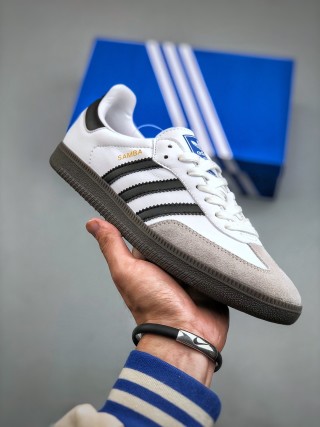
If you've spent any time in the rep sneaker community, you've seen the terms UA vs replica vs fake thrown around constantly — sometimes interchangeably, often incorrectly. Understanding the real difference isn't just trivia; it directly determines whether you're getting a pair that turns heads or one that turns stomachs. This guide breaks down every tier, explains what separates them in practical terms, and tells you exactly what to look for before you spend a dollar.
The Three-Tier System Explained
The replica sneaker world has developed its own vocabulary over years of community testing and batch reviews. At the top sits UA (Unauthorized Authentic), in the middle you have general-purpose replicas, and at the bottom are outright fakes. Each tier reflects a dramatically different level of investment in materials, tooling, and factory skill. Lumping them together is like comparing a tailored suit to a Halloween costume — they're technically both "not the original," but that's where the similarity ends.
What Does UA (Unauthorized Authentic) Actually Mean?
UA stands for Unauthorized Authentic — and that phrase is doing a lot of work. These pairs are produced in or near the same factories that supply brands like Nike, Adidas, and New Balance, using the same or near-identical raw materials that pass through those supply chains. The "unauthorized" part simply means the production run was not approved or licensed by the brand. The products are not affiliated with, endorsed by, or associated with any official brand — they are unauthorized reproductions that happen to be built to a near-identical specification.
True UA production is rare and expensive. When a factory runs an unauthorized batch using OEM-grade rubber compounds, genuine knit uppers, and spec-accurate lasts, the result is a pair that is, for most practical purposes, indistinguishable from retail at a visual and tactile level. The foam density, the stitch count, the weight — all of it aligns with what you'd find pulling a pair from an official retail box.
What Is a Replica Sneaker?
High-Tier Replicas (1:1 / Mirror-Grade)
A 1:1 or mirror-grade replica is the consumer-facing description of a UA-quality product. It means the factory has invested in accurate tooling — correct midsole geometry, proper heel clip dimensions, accurate tread patterns — and sourced materials that replicate the feel and appearance of the originals. When people in the community talk about "best batch" or "top batch," they're referring to this tier. Nike replicas at this level, for example, will use the correct React or Air unit profiles, accurately stitched Swoosh placement, and grade-A leather or mesh that holds colour correctly.
Mid-Tier Replicas
Mid-tier replicas use acceptable tooling but cut corners on materials. The silhouette reads correctly from a distance but reveals itself under close inspection — slightly off colorways, stiffer foam, cheaper lace eyelets. These are often marketed with vague claims but are noticeably lighter in feel and finish quality. They're not terrible, but they're not what serious buyers seek out.
What Are Fakes / Superfakes?
"Fakes" — sometimes called "superfakes" in mainstream press, though insiders use that term differently — are the lowest-quality unauthorized reproductions. They are typically manufactured by small operations with no investment in proper lasts, original material sourcing, or accurate colorway matching. Proportions are wrong. Logos are misaligned. The foam compresses unevenly. These are the pairs that flood dollar-store markets and give the entire replica community a bad reputation. No serious rep buyer is interested in this tier, and no honest seller should conflate it with UA-quality production.
How to Tell the Difference: What to Actually Check
Whether you're evaluating a listing or inspecting a pair in hand, these are the details that separate tiers instantly:
- Midsole foam density: Press the midsole — UA/1:1 pairs use the correct compound and spring back accurately. Fake pairs feel hollow or too stiff.
- Stitching count and alignment: On any leather panel or Swoosh overlay, count the stitches per centimetre. High-tier pairs match the retail stitch density. Low-tier pairs have loose, uneven stitching with visible thread gaps.
- Logo placement and sizing: On Jordan replicas and Nike SBs, the Jumpman and Swoosh placement is measured in millimetres. Fakes are often off by 3-5 mm, which is visible without a ruler.
- Outsole tread depth and rubber hardness: Genuine-spec outsoles use durable carbon rubber in high-wear zones. Budget fakes use a single soft compound that wears unevenly within weeks.
- Heel counter rigidity: Squeeze the heel cup. A UA-tier pair holds firm. A fake collapses inward. This is one of the fastest quality checks you can do.
- Insole printing and padding: The insole should carry accurate brand typography and the correct foam thickness for the model. Superfakes print over a flat EVA slab with a blurry logo.
- Weight: Weigh both shoes on a kitchen scale. Match against community-documented retail weights. A pair that's more than 10g off per shoe is almost certainly not hitting UA spec.
Batch Culture: Why the Source Factory Matters
Within the UA and 1:1 tier, the community further classifies pairs by "batch" — shorthand for the specific factory production run. Batches for popular models like the Adidas Yeezy line or Air Jordan 1s are reviewed in detail by dedicated enthusiast communities who photograph and measure every component. A "PK batch" or "LJR batch" label signals a specific factory with a documented track record, known tolerances, and community-verified quality scores. This batch culture is what allows informed buyers to make precise comparisons — it's the opposite of the anonymous, untraceable supply chain behind cheap fakes.
Material Sourcing: The Single Biggest Quality Driver
More than tooling, more than factory skill, material sourcing is what ultimately separates UA-quality pairs from everything below them. Consider what goes into a top-tier pair:
- Leather and suede: Full-grain leather on an Air Force 1 UA pair should have the same grain texture and thickness (approximately 1.4-1.6 mm) as retail. Budget alternatives use corrected-grain or split leather that cracks under stress.
- Knit uppers: Flyknit and Primeknit constructions require the exact yarn weight and loom programming to replicate correctly. UA factories source OEM-spec yarn; fake factories use cheaper filament yarn that pills and bags out.
- Foam compounds: Nike React, Adidas Boost, New Balance Fresh Foam — each has a specific density and rebound profile. Matching these requires the correct chemical formulation, not just the right shape.
- Hardware: Metal aglet tips, zip pulls on designer bags, and watch case metal — hardware is where budget productions visibly cut costs. UA-tier pairs use the same alloy grades and plating thickness as the originals.
- Adhesives: Upper-to-midsole bond strength is measurable. Well-sourced adhesives outlast the wearable life of the shoe. Cheap adhesives delaminate at the toe box within months.
- Colorway accuracy: Dye lots and Pantone matching matter. A true UA batch is colour-checked against a retail reference. Fakes approximate the colorway from photographs and miss on hue or saturation.
Frequently Asked Questions
Are UA sneakers the same as authentic sneakers?
No. UA sneakers are unauthorized reproductions — they are not authentic, official, licensed, or endorsed by the brand. They are not affiliated with Nike, Adidas, Jordan Brand, or any other label. What they are is a very high-quality replication of the design and material specification, produced outside of the official brand supply chain. The distinction matters both legally and ethically: you are buying an unauthorized product, and any honest UA retailer should be upfront about that fact.
How do I know if I'm buying UA-quality or just a regular fake?
The most reliable signal is the seller's transparency. A reputable source will name the batch, show real QC (quality control) photos of the actual pair before shipping, and describe the materials used. You should also cross-reference the batch name against community review resources. At our quality assurance page, we document exactly what checks each pair passes before it leaves the warehouse — that kind of process documentation is something no fake-tier seller bothers with because there's nothing to document.
Is the price difference between tiers worth it?
For most buyers, yes — the jump from fake to UA-tier is the most impactful spend in the rep world. A fake pair might cost $40-60 and last a season if you're lucky. A UA-quality 1:1 pair in the $150-250 range uses materials that wear at a rate comparable to retail, holds its shape correctly, and holds up to casual comparison without issue. The mid-tier is the most confusing value proposition: you pay more than fake pricing without getting UA results. If budget allows, skip the middle and buy the best batch available for your model.
Ready to Buy with Confidence?
Now that you understand the real difference between UA, replica, and fake, you're in a much better position to spend your money wisely. At UADEPOT, every pair we list is sourced from verified top-batch factories, photographed for QC, and described honestly — because the rep community runs on trust and detail. Browse our full catalogue including Nike replicas, Jordans, and Yeezys, filter by your size, and get free worldwide shipping straight to your door. Know what you're buying, buy the best version of it, and wear it with confidence.